


Cost per person is $9,999 / £7,353
Single supplement is $2,299 / £1,699
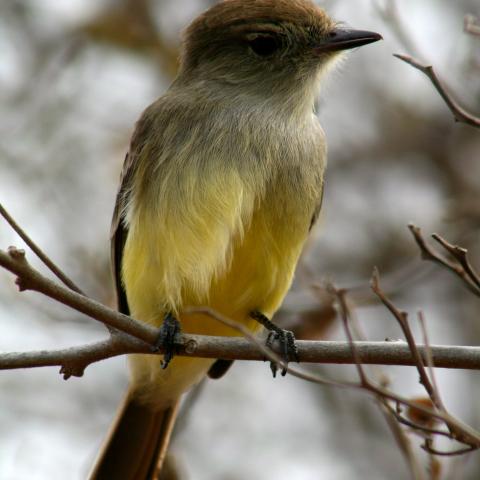
Walk in the footsteps of Charles Darwin on a trip to the Galapagos Islands with Terra Incognita Ecotours. This is home to some of the most interesting and accessible wildlife in the world. You will swim and snorkel with sea lions and sea turtles, come within inches of blue-footed boobies, marine iguanas, magnificent frigatebirds, and the giant tortoises in the wild. Watch the dance of the waved albatross, and experience the diversity of the legendary finches, and so much more. Gain an appreciation for how remarkable life on Earth can be!
We will donate to the important wildlife saving efforts of Galapagos Conservation.
We will employ local people.
We will use locally owned and operated lodges and outfitters.
We will use local goods and services.
This is an ecotour that will make a difference to you and to the places we visit.
Upcoming Dates
Sunday, August 22, 2027 to Tuesday, August 31, 2027
Availability — OPEN to enrollment
Itinerary
Day 1: Arrival to Quito, Ecuador
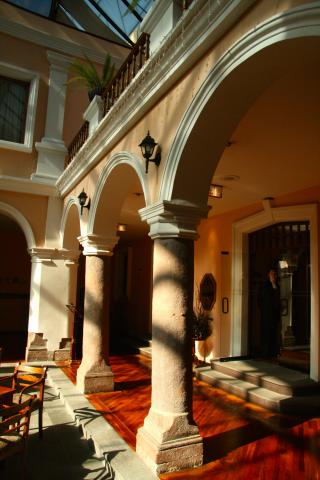
Plan to arrive anytime today in Quito, where you will be met and transferred to the charming Hotel Patio Andaluz in the colonial city of Quito, which is located in the highlands of the Ecuadorian Andes. Get to know your fellow explorers as we enjoy our Welcome Dinner this evening.
Overnight at Hotel Patio Andaluz (D)
Day 2: Quito
We begin our adventure at 9am today, a relaxed start to recover from flights yesterday, we will visit the “Virgen de El Panecillo” which stands on a hill-top prominently over the center of Quito, visible from almost everywhere in the city. Not only is it the tallest aluminum statue in the world, it's also the world's tallest winged representation of the Virgin Mary. We will also visit the Archbishops Palace, and the Iglesia de la Compania, with it’s amazing gold leaf ceiling and columns, plus the Presidential Palace ending around lunch time to allow some free time to explore on your own. Dinner at the Hotel this evening.
Overnight at Patio Andaluz (B,D)
Day 3: Quito to Isla Santa Cruz, Galapagos
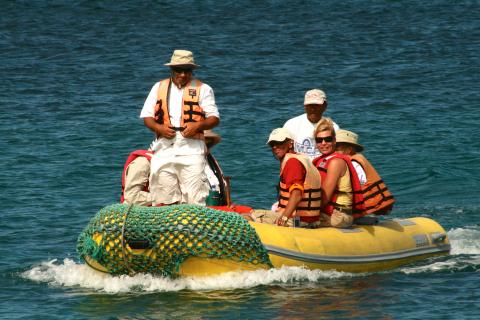
Early this morning we drive back to the International Airport for the flight to the airport on Baltra Island, adjacent to Isla Santa Cruz. After passing through immigration and baggage claim, we will be met by the M.Y. Natural Paradise staff and transferred to the yacht. You will be shown to your cabin where you will have some time to settle in before lunch and a welcome briefing.
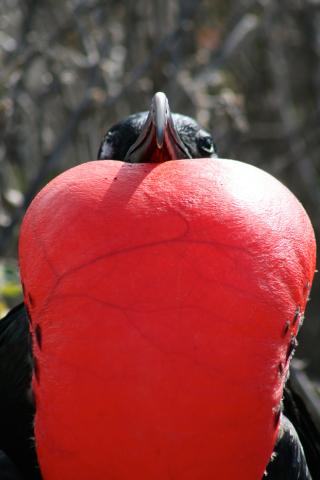
In the afternoon, you will visit North Seymour Island where you may see Galapagos sea lions, blue-footed boobies, and magnificent frigate birds which are abundant on this island. North Seymour was formed by a series of submarine lava flows containing layers of sediment that were uplifted by tectonic activity. The island is characterized by its arid vegetation zone. Dinner is on board this evening.
Overnight on board M.Y. Natural Paradise (B,L,D)
Day 4: Isabela and Fernandina Islands
In the morning, we will visit Vicente Roca Point which is a large bay with spectacular sea life. Keep an eye out for seahorses, sea turtles, and the strange yet fascinating Mola mola (or sun fish) while you snorkel. This is a great area for Penguins, Blue-footed boobies, terns, Nazca boobies, two types of sea lions, sea turtles, rays and puffer fish.
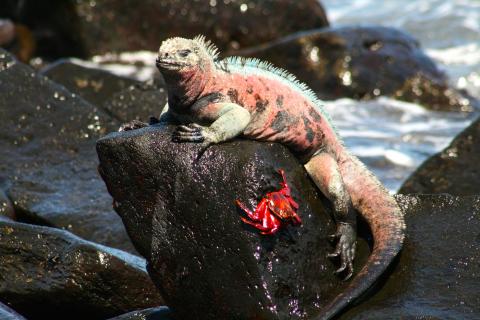
In the afternoon we will be crossing the Bolivar Channel that divides Isabela and Fernandina Islands, and we will land at Espinoza Point, and after walking past a colony of marine iguanas and a group of sea lions, you will reach the island’s highlight: the flightless cormorant nesting site. This area also provides a great opportunity to see the Galapagos hawk!
Overnight on board M.Y. Natural Paradise (B,L,D)
Day 5: Isabela Island
We start our day on Isabela at Urbina Bay which is located at the base of Alcedo Volcano on the west coast between Tagus Cove and Elizabeth Bay. This area experienced a major uplift in 1954 causing the land to rise over 16 feet. The coast expanded half a mile out leaving marine life stranded on the new shore. This area is also a great place for snorkeling.
This afternoon we visit Moreno Point located southwest of Elizabeth Bay. Here a dry landing onto what was once flowing lava is possible, where we plan to hike a mile or so over this amazing volcanic landscape! The lava has left craters in its wake which formed crystal tide pools. By looking into the pools, you can peer into another world as the marine life drifts by your window. In the brackish pools of this area, you may see pink flamingos, white-cheeked pintails, and common gallinules. If you look carefully into the pools, you may see white-tip reef sharks and some sea turtles.
Overnight on board M.Y. Natural Paradise (B,L,D)
Day 6: Isabela Island
We start our day with a visit to the Sierra Negra Volcano, which is the largest basaltic caldera in the Galapagos with a diameter of 6.2 miles (10 km). The site offers impressive views and the opportunity to observe up to seven species of finches and a rich display of vegetation. The north side of the caldera provides evidence of its most recent volcanic activity in 2005.
In the afternoon we will explore the wetlands of Isabela Island located just outside of Puerto Villamil. They consist of lagoons, swamps, and mangroves and are home to a variety of unique bird species such as flamingoes, common stilts, whimbrels, white-cheeked pintails, and gallinules. The wetlands can be visited on foot via a path through the swamps.
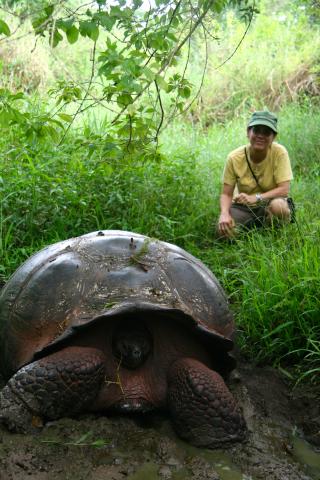
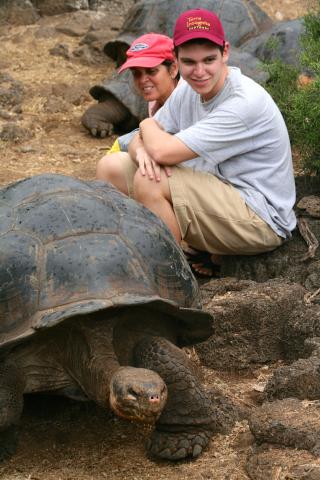
We end our busy first day on Isabela Island with a late afternoon visit to Arnaldo Tupiza Breeding Center which is located about one mile (1.5 km) from Puerto Villamil. Here, tortoise populations from South Isabela, Sierra Negra Volcano, Cerro Azul, Cazuela, Cinco Cerros, Roca Union, San Pedro, Tables and Cerro Paloma have been bred in captivity. In total there are 330 juvenile and adult tortoises.
Overnight on board M.Y. Natural Paradise (B,L,D)
Day 7: Santiago Island
In the morning, we visit Chinese Hat, this small islet is located near the southeast coast of Santiago Island. Its name comes from the distinct shape of the islet’s summit. Chinese Hat is a great location to view many geological formations such as lava tunnels and lava flows. Some of the lava flows were formed underwater and subsequently raised above sea level. The presence of coral heads on the lava flow indicates this phenomenon.
For the afternoon we plan to visit Borrero Bay In the northern area of Santa Cruz Island, Bahía Borrero is a beautiful white coralline beach used as a nesting site by Green Seaturtles. This extinct volcano, due to its altitude, shows all the different zones of vegetation, changing from the littoral to the arid, and then with more moisture into the humid zone, to end in the dry pampa zone.
Overnight on board M.Y. Natural Paradise (B,L,D)
Day 8: Floreana Island
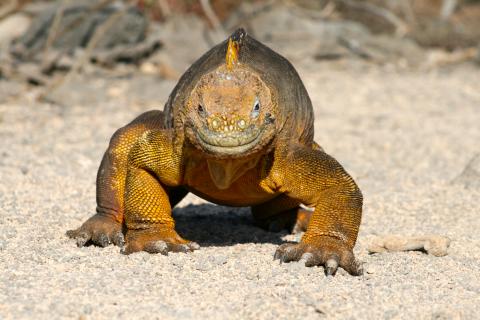
We have moved further along in our journey and today we visit Floreana Island, beginning our adventure at Baroness Viewing Point is a fantastic place to absorb the environment of the Galapagos. Once inhabited by an indulgent baroness and her three lovers, the history of this island is intriguing. The legends about this baroness are associated with a fascinating murder mystery. There are easy trails in this area for exploring the flora and fauna of Floreana.
Next we stop at Post Office Bay where we will land on a beach and head to a spot where 18th century whalers placed a wooden barrel used as an unofficial mailbox. The custom continues to this day with Galapagos visitors. So, don’t forget your postcards, and don’t be surprised if the post card arrives to its destination before you even get home! We will also continue the tradition by taking any postcards that are addressed to people in our hometowns, we must then take them home and hand-deliver them!
Afterwards we hike to Cormorant Point that hosts a large flamingo lagoon where other birds such as common stilts and white-cheeked pintails can also be seen. The beaches on this island are distinct: The Green Beach is named so due to its green color, which comes from a high percentage of olivine crystals in the sand, and the Flour Sand Beach is composed of white coral.
Later this afternoon we cruise on to Champion Islet, named after the whaler Andrew Champion, it is a small island located just offshore from Floreana Island in the southern part of the Archipelago. Considered as one of the most beautiful places on Galapagos for all snorkeling and diving fans and an excellent opportunity for dolphin watching.
Overnight on board M.Y. Natural Paradise (B,L,D)
Day 9: Espanola Island
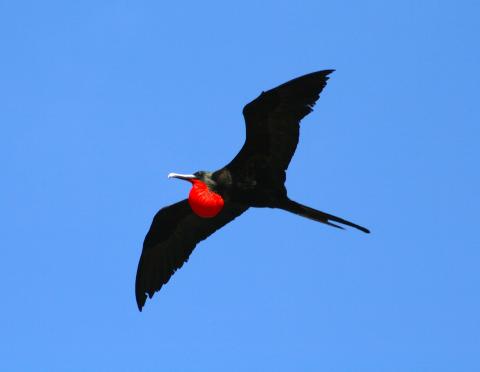
We may have saved the best for last! Our morning excursion takes us to the trail around Suarez Point here you will have the chance to spot Blue-footed boobies, nesting albatrosses, and Nazca boobies. This island is the breeding site of nearly all of the world’s 12,000 pairs of waved albatrosses, and in August there should be fluffy chicks in all the nests! You will also visit a beautiful site on the ocean front where there is a cliff that the large albatrosses use as a launching pad! You will have the chance to see the famous blowhole that spurts sea water into the air. The landscape is great for photography.
After repositioning the boat and lunch aboard, we visit the spectacular Gardner Bay. After landing, you can walk across a lovely white-sand beach amongst a busy sea lion colony or dive into the water to swim with sea lion pups. You may also see curious mockingbirds on the beach.
Overnight on board M.Y. Natural Paradise (B,L,D)
Day 10: Galapagos Islands to home
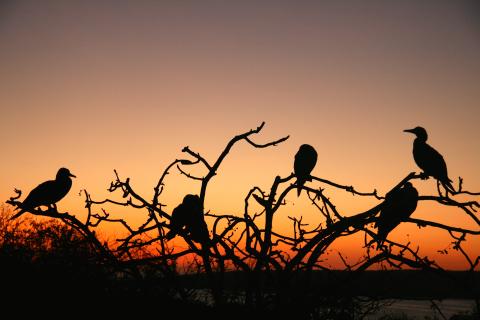
We will start the day with an excursion to Lobos Island which means “Sea Lion Island.” This appropriately named island is ripe with noisy, playful, jolly sea lions who will welcome you to their home with open, well, fins.
After exploring Lobos Island we will transfer to San Cristobal and the airport for our flight back to Quito. Once in Quito you can transfer to the International Terminal and flights either headed home or perhaps you are electing to head to Peru to visit Machu Pichu. Please make sure your flight is AFTER 9pm.
(B)
Travel Information
Thanks for choosing Ecuador with Terra Incognita Ecotours, Inc. It is our pleasure to help you plan for your upcoming ecotour. To ensure that your travel arrangements are made to your satisfaction, please take a few minutes to read through this information.
What you need to have with you on your trip:
Passport: If you are a U.S., U.K., Australian or Canadian citizen, you will need a passport, valid for six months from the date of completion of your trip.
It is always a good idea to make a photocopy of your airline tickets and of the pages of your passport that have the number, your photograph and other pertinent information. Keep the copies separate from the originals.
Visas: Please consult the Ecuador consulate or embassy nearest you for visa requirements to enter Ecuador. If a visa is required, you are responsible for obtaining it.
Documents for children under the age of 18, not traveling with both parents: The U.S. government is increasingly requiring that minors under 18 years of age traveling alone, with grandparents, or with one parent/legal guardian only, carry a notarized document signed by both parents or by the parent/legal guardian not traveling with the child. We suggest you obtain such a document (noting the age of the child, relationship to traveling adult(s), dates of travel, and destination) to avoid potential problems. For example, in the case of divorce, the parent with legal custody must sign the permit, and the accompanying adult must carry proof of this fact. In addition, if the child’s surname differs from that of either parent, you may want to carry the child’s birth certificate.
Emergency Contact number while on your ecotour:
Call COLLECT (813) 476-2810
Practical Information
Currency: The currency of Ecuador is the U.S. dollar. Major credit cards are generally accepted at hotels, restaurants and larger stores. We suggest you carry U.S. currency in small denominations for smaller purchases such as taxis, refreshments or other miscellaneous expenses.
Health: All information we obtain regarding health precautions is received from the Centers for Disease Control in Atlanta at 404.332.4559 or www.cdc.gov.
Please note that Terra Incognita Ecotours, Inc., as a travel company, is in no way authorized to prescribe any inoculations or medications. We recommend that you consult your personal physician for medical advice, showing him or her the brochure that indicates the places you will be visiting. Your physician is most familiar with your personal medical history and is best qualified to determine your particular needs. It is always advisable to have physical and dental check-ups before you leave.
At the present time, no specific immunizations are required for this ecotour, although the CDC recommends the following:
Hepatitis A or immune globulin (IG). Transmission of hepatitis A virus can occur through direct person-to-person contact; through exposure to contaminated water, ice, or shellfish harvested in contaminated water; or from fruits, vegetables, or other foods that are eaten uncooked and that were contaminated during harvesting or subsequent handling.
Typhoid vaccine. Typhoid fever can be contracted through contaminated drinking water or food, or by eating food or drinking beverages that have been handled by a person who is infected. Large outbreaks are most often related to fecal contamination of water supplies or foods sold by street vendors.
As needed, booster doses for tetanus-diphtheria, measles, and a one-time dose of polio vaccine for adults.
Please also note:
A certificate of yellow fever vaccination may be required for entry into certain countries in South America. For detailed information, see Yellow Fever Vaccine Requirements and Information on Malaria Risk and Prophylaxis, by Country. Also, find the nearest authorized U.S. yellow fever vaccine center. The normal "childhood" vaccines should be up to date: Measles, Mumps, Rubella (MMR Vaccine), Diphtheria, Tetanus, Perturssia (DTP Vaccine) and Polio vaccine.
Swimming: There are several opportunities to swim and snorkel during the ecotour. We advocate the buddy system for everyone, at all times, and children less than 14 years of age should always be accompanied by an adult while swimming.
Time Difference: Ecuador is one hour behind of Eastern Standard Time.
Weather: The climate of Ecuador comprises a wide range of weather conditions. The highlands of Ecuador are warm in the daytime, cool at night. The Galapagos Islands are located directly on the equator, so days are warm/hot and nights only cool down a little. You should be preapred for a rain shower.
Please remember that the sun’s rays are more vertical than you may be used to, so you can sunburn more easily. Be careful of the midday sun.
Lodging Info
Hotel Patio Andaluz
Hotel Patio Andaluz Quito, an elegant Boutique hotel located only 500 feet off the Main Square, also known as the Independence Plaza. The hotel is located in a colonial style house built at the end of the XVI Century, and only minutes walk away from Church and Square of San Francisco; and less than 5 minutes walk from the famous “La Compañia” Church with its impressive gold leaf inner decoration. Its spacious restaurant “El Rincón de Cantuña”, inside its main Patio offers excellent options of Ecuadorian and Spanish flavors and a variety of wines from its recognized Wine cellar. There are 32 comfortable rooms (11 Suites and 21 standard rooms) and their complementary services and amenities provide luxury in the colonial heart of Quito.
M.Y. Natural Paradise
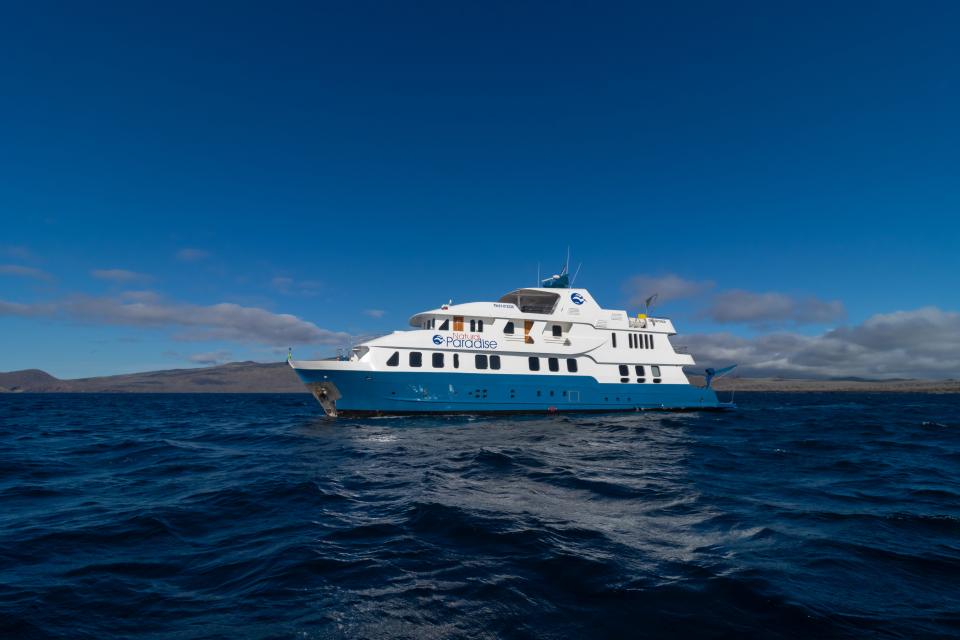
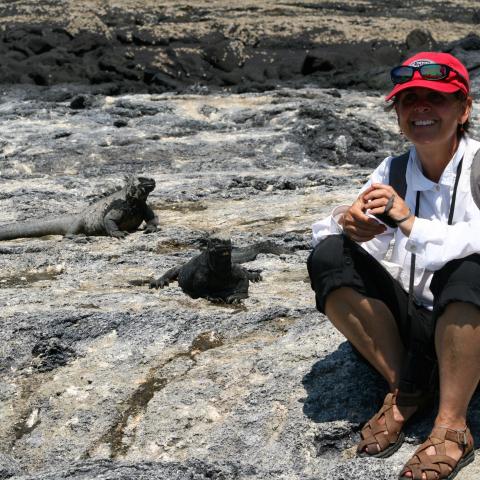
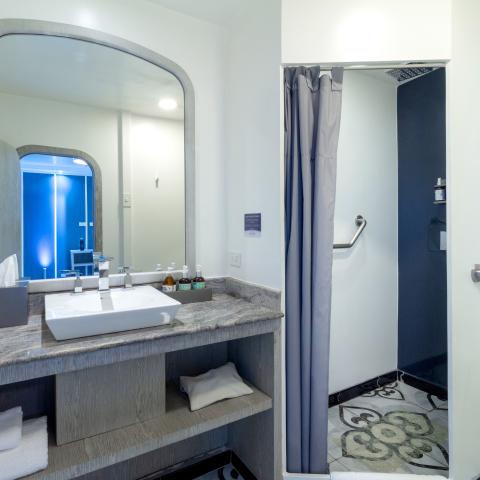
The Motor Yacht Natural Paradise was specifically designed and built to cruise the Galapagos. The M.Y. Natural Paradise offers 9 luxurious cabins, some of which have an outdoor balcony, and also has ample social areas including a superb sundeck with a large jacuzzi.
Private facilities in each cabin - private bathrooms, cold/hot water, air conditioned, hair dryer, telephone for internal communication on board, and a safe box. The M.Y. Natural Paradise cruises at 12 knots and has 10 crew, 1 Cruise director and 1 Naturalist guide.