

Cost per person is $9,999
Single supplement is $2,500
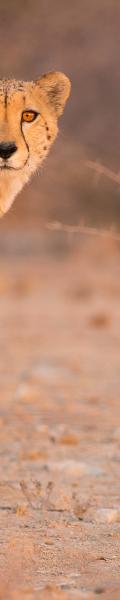
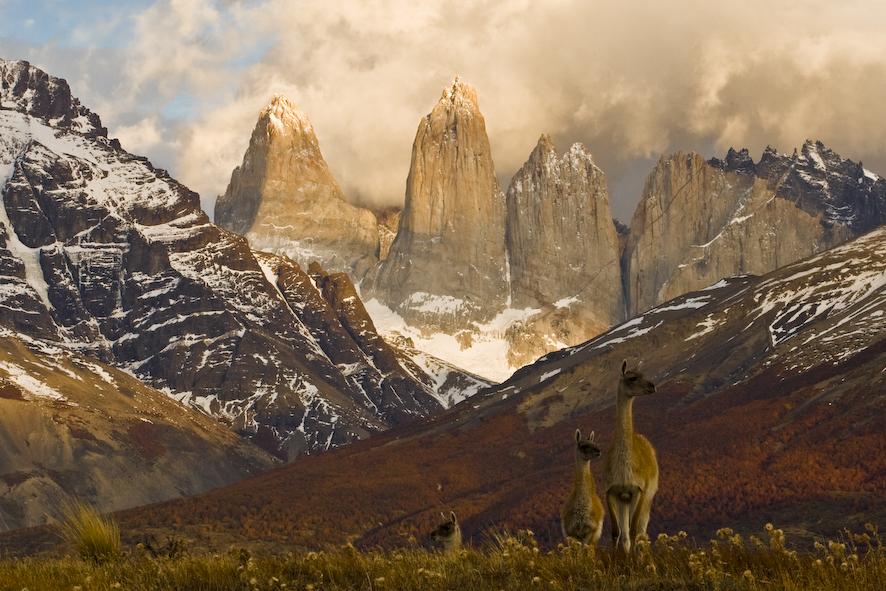
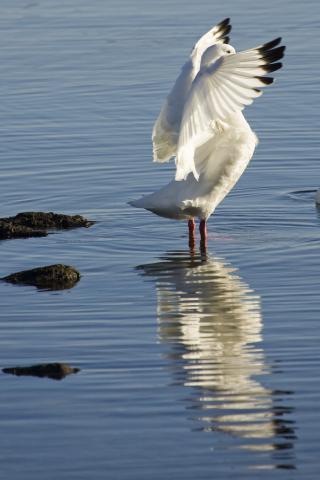
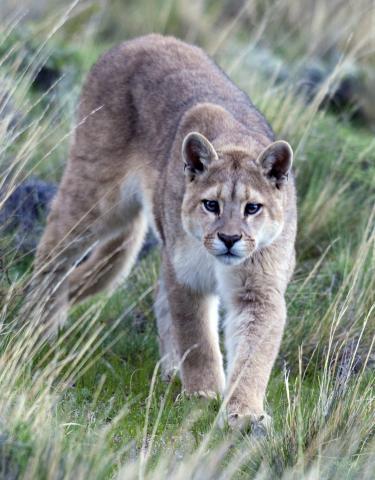
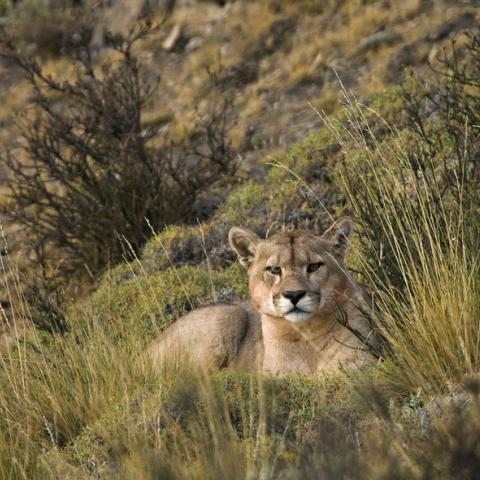
This is a special journey into “Wild Patagonia”, with some of the most spectacular scenery on Earth! The landscapes of Torres del Paine National Park are mind-blowing, and the wildlife that live here are unique: wild, beautiful, and approachable. We work with a dedicated "Puma Tracking Team" who will help us find the elusive top predator in the area, the puma, making our chances of sighting this cat extremely high. In addition, we will see guanaco, fox, Andean condor, rhea, caracara, flamingo and so much more. Our accommodations include historic hotels and working estancias, a truly authentic experience.
In keeping with the principles of responsible ecotourism:
We will make a donation to the Important work of Puma Conservation.
We will employ local people.
We will use locally owned and operated lodges and outfitters.
We will use local goods and services.
This is an ecotour that will make a difference to you and to the places we visit.
Upcoming Dates
Saturday, December 4, 2027 to Saturday, December 11, 2027
Availability — OPEN to enrollment
Itinerary
Day 1: Arrival to Puerto Natales, Chile
Plan to arrive to Puerto Natales at a convenient time today. You can then transfer the five minute taxi ride to the beautiful and sophisticated Singular Patagonia Hotel. The Welcome Dinner is at the hotel this evening.
Overnight at The Singular Patagonia (D)

Day 2: Torres del Paine National Park
After a relaxed breakfast we depart for Torres del Paine National Park. While driving to the National Park we will visit Cueva del Milodon, where fossilized remains of giant ground sloths were discovered only 100 years ago. We then continue to the World Heritage site of Torres del Paine National Park where we will arrive around lunchtime. Enjoy a visit to Gray Glacier and continue our site-seeing drive with stunning views of the horns and towers for which the park is famous! We arrive at our estancia late this afternoon.
Overnight at Estancia Cerro Guido (B,L,D)
Day 3: Estancia Cerro Guido / Puma Tracking Experience
Today we will explore the Estancia we call home, visiting areas known to have pumas - we check the game cameras and learn about how the 250,000 acre Estancia is balancing the often conflicting goals of ranching and conservation. The Estancia used to kill pumas to protect their livestock but has now adopted a more “conservation oriented” approach to protecting pumas and other wildlife, while also farming sheep and cattle. Learn about the progressive practices they are employing, including guard dogs, animal husbandry and accepting some losses to wildlife.
Overnight at Estancia Cerro Guido (B,L,D)
Day 4: Estancia Cerro Guido
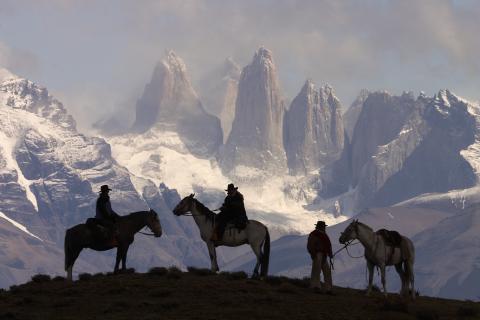
Today we will continue to explore the Estancia we call home, visiting areas known to have pumas, but also exploring other parts of the property, perhaps venturing back into Torres del Paine National Park to visit Lago Azul, or some of the many waterfalls in the Park, weather permitting we will also plan to take a hike in the Sierra Baguales valley.
Overnight at Estancia Cerro Guido (B,L,D)
Day 5: Torres del Paine - Horseback ride
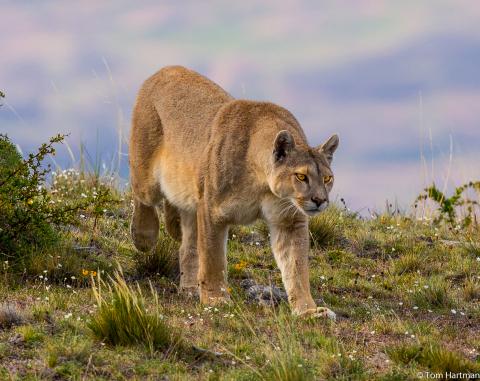
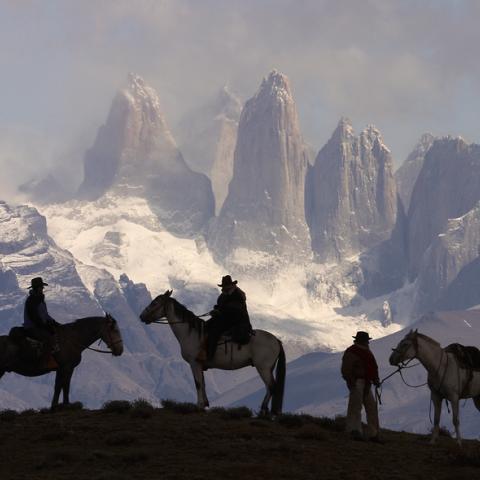
Today we explore the Estancia by horseback (or choose from a number of other Estancia-based activities including fly fishing, hikes, cultural tours) and from the vantage point of our horses we enjoy magnificent views of the Torres del Paine massif and also encounter local wildlife including guanacos, Darwin’s rheas, gray foxes and armadillos! We enjoy a picnic lunch at one of the Estancia “stations” and then ride back in the afternoon.
Overnight at Estancia Cerro Guido (B,L,D)
Day 6: Estancia Cerro Guido
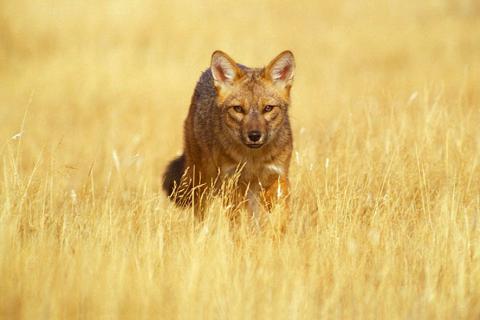
Today we explore the Estancia some more, maybe anyone who did not see a Puma on our previous attempts can continue their search, or we can enjoy another hike either on the estancia or in the adjacent National Park. We could also attempt another horseback ride or continue to explore the Sierra Baguales Valley, which sits right on the border with Argentina. It is a beautiful hike with impressive views for miles. We return to Estancia Cerro Guido in the late afternoon where we will enjoy a festive BBQ dinner.
Overnight at Estancia Cerro Guido (B,L,D)
Day 7: Estancia Cerro Guido to Puerto Natales
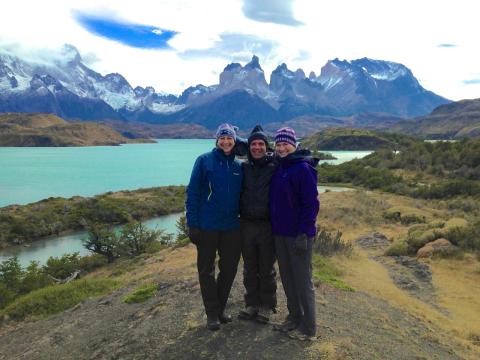
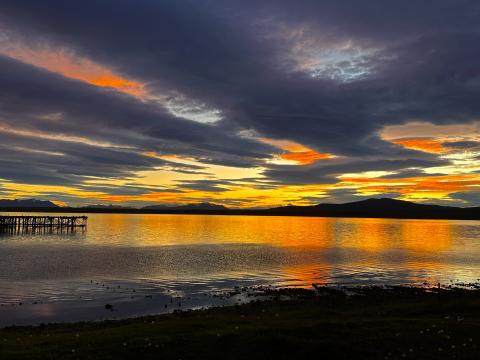
Today we have our last nature hike along the shores of Lake Sarmiento, with a picnic lunch overlooking the lake. After lunch we drive back to Puerto Natales and check back into The Singular Hotel. There will be time this afternoon for anyone to visit Puerto Natales to wander town, and of course a chance to shop for handicraft items to take home! We enjoy our farewell dinner this evening overlooking the waterfront and Puerto Natales.
Overnight at The Singular Patagonia (B,L,D)
Day 8: Puerto Natales to home
Breakfast and pack, then transfer to Puerto Natales airport at a convenient time for your flights back to Santiago and your flights home.
(B)
Travel Information
Thanks for choosing Chile with Terra Incognita Ecotours, Inc. It is our pleasure to help you plan for your upcoming ecotour. To ensure that your travel arrangements are made to your satisfaction, please take a few minutes to read through this information.
What you need to have with you on your trip:
Passport: If you are a U.S., U.K., Australian or Canadian citizen, you will need a passport, valid for six months from the date of completion of your trip.
It is always a good idea to make a photocopy of your airline tickets and of the pages of your passport that have the number, your photograph and other pertinent information. Keep the copies separate from the originals.
Visas: Please consult the Chile consulate or embassy nearest you for visa requirements to enter Chile. If a visa is required, you are responsible for obtaining it.
Documents for children under the age of 18, not traveling with both parents: The U.S. government is increasingly requiring that minors under 18 years of age traveling alone, with grandparents, or with one parent/legal guardian only, carry a notarized document signed by both parents or by the parent/legal guardian not traveling with the child. We suggest you obtain such a document (noting the age of the child, relationship to traveling adult(s), dates of travel, and destination) to avoid potential problems. For example, in the case of divorce, the parent with legal custody must sign the permit, and the accompanying adult must carry proof of this fact. In addition, if the child’s surname differs from that of either parent, you may want to carry the child’s birth certificate.
Emergency Contact number while on your ecotour:
Call COLLECT (813) 476-2810
Practical Information
Currency: The currency of Chile is the Peso. The exchange rate as of December 2025 was 1 US$ = 914 Pesos. Major credit cards are generally accepted at hotels, restaurants and larger stores. U.S. dollars are accepted in Chile, so we suggest you carry U.S. currency in small denominations for smaller purchases such as taxis, refreshments or other miscellaneous expenses.
Health: All information we obtain regarding health precautions is received from the Centers for Disease Control in Atlanta at 404.332.4559 or www.cdc.gov.
Please note that Terra Incognita Ecotours, Inc., as a travel company, is in no way authorized to prescribe any inoculations or medications. We recommend that you consult your personal physician for medical advice, showing him or her the brochure that indicates the places you will be visiting. Your physician is most familiar with your personal medical history and is best qualified to determine your particular needs. It is always advisable to have physical and dental check-ups before you leave.
At the present time, no specific immunizations are required for this ecotour, although the CDC recommends the following:
Hepatitis A or immune globulin (IG). Transmission of hepatitis A virus can occur through direct person-to-person contact; through exposure to contaminated water, ice, or shellfish harvested in contaminated water; or from fruits, vegetables, or other foods that are eaten uncooked and that were contaminated during harvesting or subsequent handling.
Typhoid vaccine. Typhoid fever can be contracted through contaminated drinking water or food, or by eating food or drinking beverages that have been handled by a person who is infected. Large outbreaks are most often related to fecal contamination of water supplies or foods sold by street vendors.
As needed, booster doses for tetanus-diphtheria, measles, and a one-time dose of polio vaccine for adults.
Please also note:
A certificate of yellow fever vaccination may be required for entry into certain countries in South America. For detailed information, see Yellow Fever Vaccine Requirements and Information on Malaria Risk and Prophylaxis, by Country. Also, find the nearest authorized U.S. yellow fever vaccine center. The normal "childhood" vaccines should be up to date: Measles, Mumps, Rubella (MMR Vaccine), Diphtheria, Tetanus, Perturssia (DTP Vaccine) and Polio vaccine.
Swimming: There are several opportunities to swim during the ecotour. We advocate the buddy system for everyone, at all times, and children less than 14 years of age should always be accompanied by an adult while swimming.
Time Difference: Chile is one hour ahead of Eastern Standard Time.
Weather: The climate of Chile comprises a wide range of weather conditions across a large geographic scale, extending across 38 degrees in latitude, making generalizations difficult. Chile within its borders hosts at least seven major climatic subtypes, ranging from desert in the north, to alpine tundra and glaciers in the east and southeast, humid subtropical in Easter Island, Oceanic in the south and Mediterranean climate in central Chile. There are four seasons in most of the country: summer (December to February), autumn (March to May), winter (June to August), and spring (September to November).
Patagonia in the extreme south has warm summers and mild winters, but temperatures can change very quickly from warm, to freezing cold, to snow, to driving rain, and it is almost always very windy! Layers are the key to wardrobe in this region.
Please remember that the sun’s rays are more vertical than you may be used to, so you can sunburn more easily. Be careful of the midday sun.

Lodging Info
The Singular Hotel, Puerto Natales
The Singular Patagonia seeks to highlight the history and heritage of the region – it is incorporated into a cold-storage plant that was declared a “National Historic Landmark” in 1996, the building site was approved by the Council of National Monuments, the government body that supervise the care and rescue of the historical, architectural and archaeological monuments. The original industrial architecture of this historical building has been preserved, adding a room module with state of the art technology and design. Blending the new and old architecture, and making your stay an experience of superior quality.
All 57 rooms and suites have panoramic windows overlooking Last Hope Sound, the fjords and spectacular snow capped mountains behind. The rooms are light and modern yet cozy with dark wood furniture, leather chairs and large beds. The Singular Wellness Spa offers a relaxing spot to unwind after a day of activities, with an indoor/outdoor swimming pool, sauna and a variety of treatments.
Estancia Cerro Guido, overlooking Torres del Paine
Here at Estancia Cerro Guido you can live an authentic Patagonian experience in the largest estancia in the region, situated between Torres del Paine National Park, the Argentine pampas and the dramatic Sierra Baguales, this is the perfect base for exploring Wild Patagonia. With a spectacular landscape, flora and fauna the estancia preserves the traditions, customs and constructions of the early Patagonia pioneers. The estancia has twelve guest rooms, all en suite that have a delicate and elegant decoration inspired in the English style, all rooms are comfortable with WiFi, hairdryers, showers, biodegradable amenities, a safe deposit box and a view out on the amazing landscape.
Most importantly this is still a working sheep farm, but the ethos has dramatically changed, the owners are now welcoming wildlife onto the property, previously the pioneer farmers were not so hospitable to wildlife (like pumas and foxes), but now they recognize that ecotourism is more profitable than sheep farming, so they are striking a balance between farming, wildlife and tourism.
We feel an ethical responsibility to encourage and sustain this dramatic change in management to encourage other adjacent landowners to also welcome wildlife onto their properties and not view wildlife as a nuisance or a pest.